
Our website uses "cookies", small text files stored on your device, to improve the user experience. These files are harmless and are essential for maintaining a smooth shopping environment.
Our use of cookies complies with Art. 4a of the Electronic Commerce Act (ECA) and Art. 6(1)(f) of the GDPR.
Prefer not to use cookies?
You can opt out by configuring your browser to warn you about attempts to store cookies. Opting out may affect the functionality of the website.
The privacy of your personal data is our priority, and your convenience when navigating the site is our goal.
We would like to inform you about the "strictly necessary" cookies that are an integral part of our platform. By accessing our site, you essentially accept these cookies, as they are essential to the proper functioning of our services and are mandatory in our systems.
These essential cookies ensure a secure and uninterrupted experience by supporting core functions and preserving the integrity of how our platform operates.
SkyPrime Platform: Provides the core functionalities you interact with directly, ensuring a reliable and efficient user journey.
SkyPrime Analytics: Protects platform stability by monitoring performance metrics and analyzing user interactions to continuously improve service quality.
These "cookies" do not track personal information and serve only to provide a seamless and secure online experience. Due to their essential role, they remain active to support the excellent performance you expect from our platform.
Restricting cookies may reduce site functionality. We use cookies such as Google Analytics to understand visitor behavior and improve your experience, without collecting personal information.
Accepting these cookies helps us provide a smoother and more secure user journey.
Disabling cookies may affect how the website works. For greater clarity, we use optional cookies:
AddThis social sharing: Allows easy sharing of content on social media.
Remember me: Securely stores login details for future visits.
They enhance your experience by enabling efficient navigation and personalized interactions.
Restricting "cookies" may interfere with the operational efficiency of our website. We value transparency and want to inform you about some optional cookies that affect your experience:
Facebook Ads: Adapts advertising based on your preferences and interactions.
Retargeting: Re-engages interested customers with relevant content.
Glami: Enhances the shopping experience with personalized fashion content.
These "cookies" aim to optimize your browsing and shopping by providing content that matches your preferences.
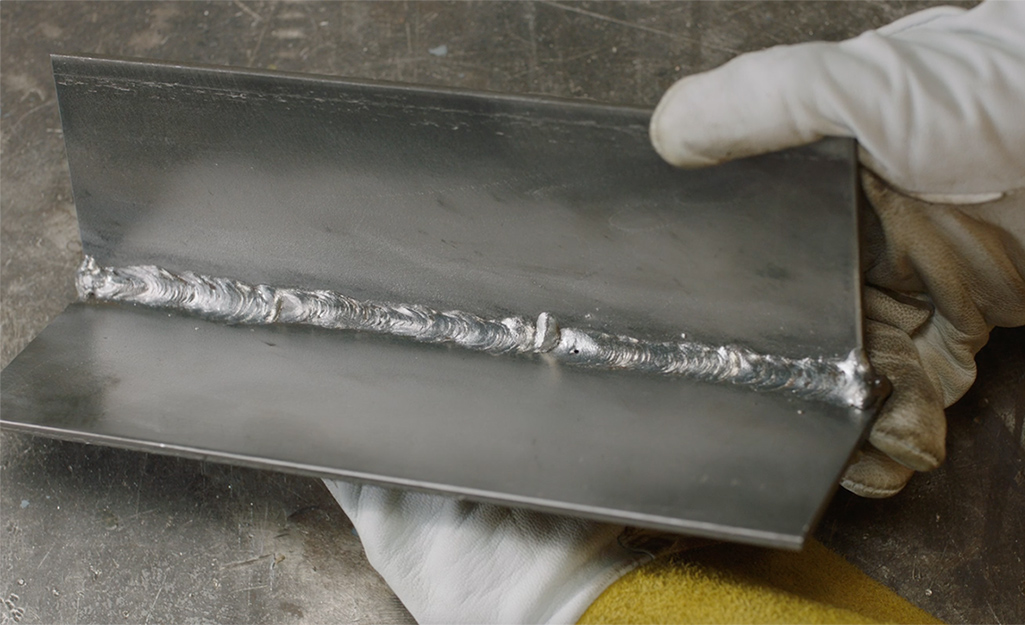
Weld seams are almost as strong as the base metal. For a number of reasons, however, weld seams contain defects that impair mechanical properties and leak tightness and spoil the appearance of weld seams and joints. Welding defects usually occur due to an inexperienced or unqualified welder, incorrect or poor technique, or inherent difficulties in the welding operation, such as arc welding, gas welding, and many others. Welding defects can be divided into the following groups: external, internal, and defects in the preparation and assembly of products for welding. Causes of these defects include uneven size and shape of the weld seam, undercuts, unfilled craters, cracks, porosity, sagging, and burn-through.
Let us take a closer look at the types of welding defects and how they affect production efficiency and user safety.
Undercut
Undercut refers to the depression or groove formed in the base metal along the weld toe. An incorrect angle between the electrode and the workpiece, improper weaving, a long arc, an improper welding sequence, and so on can lead to undercut. Magnetic arc blow during DC welding is also a cause of metal undercut. There can be several causes of this defect. Excessively high current that overheats the base metal, and not holding the electrode at the edges long enough during weaving. An incorrectly chosen torch angle, weld position, and welding parameters. This defect most often forms in horizontal welds. Eliminate it by welding a thin bead along the undercut line. To avoid defects, you should use certain measures against undercut—low current, a change in welding technique and pausing at the undercut edge, a lower welding speed, proper edge preparation, and cleaning the plate before welding.
If small gas pores form and spread in the weld metal, this defect is called „porosity “.
Porosity
Porosity is gas trapped in the weld metal; it can occur both inside and on the surface of the weld bead, and wherever it is located, it weakens the strength of the weld. Here are some potential causes that can lead to porosity.
 Causes of porosity: contamination of the weld edges, rust, moisture on the weld edges, moisture in the electrode coating and flux, a long arc length, incorrect flame adjustment, and excessive cooling of the weld pool. It can also result from improper welding technique on a contaminated metal surface.
To avoid porosity, use low current and the correct electrode, welding light steels, medium-carbon steels, and alloy steels with low-hydrogen electrodes. Store electrodes in a warm, dry place, and rework by grinding and rewelding where necessary.
Slag inclusion
Slag inclusions are usually observed where lack of penetration occurs. The cause of slag inclusions is the short-term cooling of a small volume of molten metal, which makes it difficult for the slag to fully rise to the surface of the weld pool; lack of fusion; slag flowing into gaps; cracking and uneven melting of the electrode coating, whose particles mechanically lodge in the weld metal; a long arc; improper welding technique; and rust on the weld edges.
 Remedies for slag inclusion:
Increase the current
Correct by grinding and rewelding
Prepare the plates so there is no blockage and the slag can float out
Cracks
The most common cause of crack formation is failure to follow welding procedure (for example: improper placement of weld seams leading to stress concentration), incorrect selection of welding consumables, high joint restraint, and rapid cooling of the structure. A high carbon content in the weld and various impurities—silicon, nickel, sulfur, hydrogen, phosphorus—also contribute to their appearance.
The most dangerous type of defect, leading to failure of the welded joint, is cracks.
 You can avoid cracks by using preheating and/or postheating of the joint, slow cooling of the welded joint, a different welding sequence and weave motion, and the correct type of electrodes. Repairing a crack consists of drilling the start and end to prevent further propagation, removing the weld, and then rewelding.
Excessive penetration
When welding a butt joint, a square edge preparation is used for 3 mm plates and a 'V' preparation for thick plates. This allows penetration through the full thickness.
 Causes of excessive penetration:
Incorrect electrode feeding.
Overheating of the weld pool.
Incorrect electrode size and type.
To avoid this, it is recommended to use low current, the correct electrode size and type, and a properly sized root face and root gap.
Lack of penetration
Insufficient or no fusion of the base metal edges with the weld metal or between weld beads constitutes lack of penetration. This is a defect in the form of incomplete fusion in a welded joint due to incomplete melting of the edges or surfaces of previously deposited weld beads. Lack of penetration between individual layers occurs for the following reasons: slag formed when depositing the previous bead not fully removed, which may be due to difficulty of removal or welder negligence; insufficient heat input (high welding speed, excessive root face, small gap between the edges, offset or distortion of the weld edges, low travel angle, incorrect polarity for the electrode class, low current, an arc that is too long or too short). Other causes of this defect may include poor cleaning of metal contamination (scale, rust, oil, paint);
Lack of penetration is eliminated by cutting out and subsequently rewelding the seam.
 Spatter
These are small metal particles that separate during arc welding and settle on the base metal and the weld surface. It is also characterized by expulsion of some of the molten metal from the welding zone.
 Causes of this type of defect are too high a current, poor cleaning of parts or electrodes, low pressure, longer welding time, a longer arc, and wetting of the electrodes. To avoid spatter, use low current, a short arc, and dry electrodes.
Overlap
Because the base metal or previously deposited weld metal is not heated sufficiently, the molten weld metal tends to roll over onto it. This is called overlap. The cause of overlap is excessive deposition of weld metal.
To avoid this, use a high welding speed and hold the electrode at a right angle so that too much metal is not deposited on one side of the weld.
 Lack of fusion
Welded joints in which the deposited weld metal does not form a cohesive bond with the base metal are known as lack of fusion. Such a defect in welded joints can occur when insufficient melting of the base metal forms at the joints of structural members. This location is most often filled with slag which, due to its structure, forms porosity and voids. This is unacceptable. The structure immediately loses its properties. When arc welding is used, lack of penetration may be due to insufficient current. This is one of the most dangerous defects. This is primarily because additional stresses begin to form at that location during subsequent service of the structure. Other causes of lack of fusion may be oxides or other foreign materials remaining on the plate surfaces, and the temperature of the base metal or of the previous pass not being raised sufficiently. To prevent lack of fusion, thoroughly clean the surface before welding and set the welding parameters to the correct values using appropriate welding techniques.
 Misalignment
During welding, when the weld joint shifts by a certain distance, misalignment occurs.
The causes of this mismatch are careless welding or welding plates of unequal thickness.
 Measures by which the defect can be avoided are: checking the joint for proper fit-up during assembly or clamping, and repairing by grinding while also taking into account their nominal thickness.
Underfill
The incomplete portion of the weld above the base plate that does not maintain the correct reinforcement height is called underfill.
 Causes of the defect are improper welding technique and increased welding speed. Insufficient fill can be prevented by periodically checking the reinforcement height with a welding gauge. Where there is insufficient fill, the weld will need to be filled again to maintain the correct face height.
Concavity or convexity
This weld is a hollow or dome-shaped surface in a fillet weld, known as concave or convex. Causes of this weld condition arise from not providing the appropriate current and not maintaining the travel speed.
 Repair consists of grinding the dome-shaped weld and providing the appropriate reinforcement height for flatness, grinding and blending the weld with the plate near the side of the plate weld.
The height of the weld layer on the base metal creates excessive reinforcement. Standard reinforcement should be 1/16" for pipe and 1/8" for plate or structure. Slow welding speed or low amperage becomes a cause of this. It can be avoided by removing the excess reinforcement by grinding.
 An open hole in the sheet that is completely melted through during welding can cause burn-through.
The cause of burn-through is excessive heat input. In this case, make a suitable V preparation of the melted zone and reweld the burned-through weld section with less heat input.
 Overlap
If the face of the weld extends beyond the toe of the weld, overlap occurs. It results from improper welding technique or an inaccurate electrode angle and travel speed. In this case, the toe of the weld should be smoothed out.
 Arc strikes, or stray arcs, are local welding marks made on the base metal near the weld joint before welding. This is due to welder carelessness and not using a scrap plate to start the weld. Wherever arc strikes are found by grinding or grinding with a grinding wheel, if they are deep, perform a dye penetrant test after grinding.
 An arc crater is the depression left at the end of the welding cycle. It occurs due to improper welding technique. If no crack appears in the crater, simply fill the hole and begin the welding process.
 Weld metal that is not parallel and does not cover the joint formed by the base metal creates waviness.
 The cause of this is an unsteady welding hand. In this case, improvement of welding technique is recommended.
Shrinkage of the weld metal during welding forces the base metal to move and distortion occurs.
It happens due to excessive heat. In such cases we advise you to use a clamp to hold the base metal in place, choose a low current for the electrode, increase the speed, and weld in small sections, allowing the metal to cool between welds.